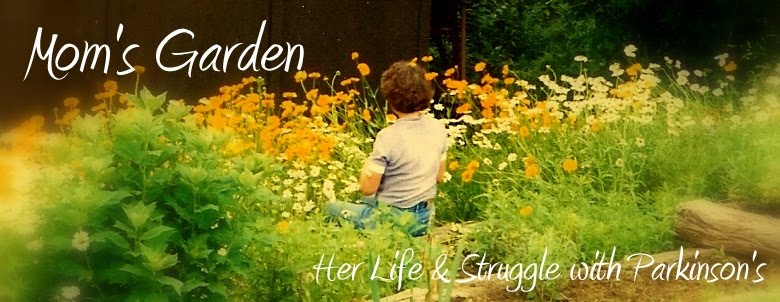
Tuesday, September 14, 2010

String With No Kite

I have been waking up the past few nights in a cold sweat.

Mother has been visiting my dreams; she is young and beautiful again, exactly as I remember her from my childhood. She then moves toward me and stares directly into my eyes while painfully asserting,

“I wanted to go home and you wouldn’t let me.”

I don’t sleep following these dreams. Instead, I spend time trying to convince myself she is wrong; after all, I hadn’t actually had a say in the matter. But, I am painfully aware she has never liked being in the nursing home ~ at least when she was able to fully process and articulate such thoughts.

Eventually I convince myself she must, on some level, understand that making the fateful decision was extremely traumatic for every member of our family.

There simply was no choice.

This might seem incredible but, to my recollection, I don’t believe I have ever had a dream specifically involving Mother, especially odd given our intense experiences over the past two years and more. If there is any one factor that might explain her appearing to me in my sleep these past few days, it is likely because we have all been riding a non-stop roller coaster of emotions these past few days.

~~~~~~~~~~~~~~~~~~~~


Many have fallen prey recently to a particularly vicious respiratory bug that has been blazing a trail across the country. I can personally vouch for its sting. While not certain if I have ever had the flu, I am now convinced my experience with this unwelcomed intruder could not be far removed.

As with any outbreak, the elderly, who are particularly vulnerable to virulent assaults, have not been spared; many residents in Mother’s nursing home have suffered the full wrath of this virus. And while most are recovering slowly, a couple of these elderly residents have been recently felled.

Unfortunately, this is the scenario which has generated so much concern for Mother these past few days.

Rarely requiring even over-the-counter pain relievers, Mom suddenly began complaining of daily non-specific body aches late last week. Over the next couple of days, she then began to demonstrate some nominal upper airway congestion. No problem. We used the available drugs at our disposal so as to dry up the secretions and all seemed to be going well.

Until Sunday night.

Just as one of my brothers arrived from out of town, Mom began to sound as though she was awash in fluid within her lungs. Our sister, getting off of the phone after trying to speak with Mother, was horrified by what she had heard; the only words Sister could utter were, “She is drowning!"

This is a noise you never want to hear.

Yet another drug was ordered to further manage the secretions, Hospice was put on alert, and Mom very quickly withdrew further into her own private world.

No matter how long we have anticipated a dramatic decline in her condition, no matter how hard friends have worked to assuage our collective concerns, the oft-told axiom holds true ~ at least for me:

“You are never prepared.”

~~~~~~~~~~~~~~~~~~~~

“It’s just that when I go into that room, I am now left not knowing what to do. I can’t even tell if she even knows I am here!"
Even before the dread virus entered our lives, attempting to wrest Mother even further from our grasp, we had all been dealing with the reality of her worsening dementia.

Many a friend has done his/her best to convince all of us that we have been doing everything for Mother “just by being there for her!”

My mind understands this.

But, my heart can't.

Intellectually, I grasp what has been happening to Mother over time, but the only indelible image I have in my head is not the face of the elderly woman lying unresponsive in the nursing home bed but an idyllic image of the younger woman who raised all of us.

“Mother doesn’t know who I am. She is just lying there with her eyes closed or, worse, wide open with nothing but a vacant look on her face. This is the woman who was everything to me when I was a little boy. But, who am I to her now?”

I can’t adequately express just how hard it is to look on as someone you truly love ~ like this woman who actually still resembles our Mother ~ who has lost so much of what made her the person you knew.

A thousand thoughts keep swirling through my head.

Dad did it right. He drove home, went to bed after a great dinner with Mylla, Uncle Jim and Kathy, and never woke up.

While the aftermath of that experience proved incredibly painful, I am convinced it is a far worse fate watching as someone you love dies ever so slowly from a progressive degenerative disease compounded by the twisted effects of dementia.

Nature allows for this double jeopardy; suffering two deaths is a cruel fate.

“Relationships are made of a multitude of invisible things” such as memories, shared experiences, hopes and fears. But when a person slowly disappears with dementia, family members and friends are left alone. It has been likened to “holding a string with no kite.”

A person might work hard to sustain himself after these losses, but the “invisible stuff” that ultimately makes up valued relationships becomes lost forever.

Exactly like a splinter under your skin. Even unseen, that splinter is no less painful.

~~~~~~~~~~~~~~~~~~~~

As yet another sad attempt has been made by one unwelcome Hospice nurse to cavalierly declare Mother’s life to be at an end, I am here to reiterate my firm belief that we ~ none of us ~ has a say in the matter.

The virus will run its course but I suspect Mother and the hand of God will ultimately be the guardians of her fate; after all, no one can deny Mom has proven, time and time again, to have an amazingly resilient soul.

If asked, I would admit to being somewhat guilty of not wanting to let go. I would love to have the Mother I once knew back ~ more than you can possibly imagine. This is still the woman who signed my report cards. This is still the woman who sent me to school, fed and clothed, every day. This is the woman who made certain there was food on the table at night as well as orchestrating ridiculously memorable Thanksgiving, Birthday and holiday celebrations.

I do most certainly want her back.

But, of course I know the fantasy will never come to pass.

In the meantime, her family will do its level best to take comfort in all of the little things. If given another opportunity, I won’t bemoan the fact that Mother can no longer fully enjoy a favorite song as she was capable of doing even a month ago; instead, I will work hard to simply enjoy watching one of her toes move to the rhythm of a “Rhapsody on a Theme by Paganini.”

We are all committed to do whatever it takes to fill whatever is left of her life with happiness and joy.

And in the end, when she has made her final decision, I will honor her wishes by surrendering to the greatest act of love available to everyone … by letting her go.

Maybe then, our eternally vibrant and beautiful young Mother will no longer haunt my dreams; perhaps, she will come and carry her youngest son on a walk to visit with her father in the middle of that beautiful field of flowers she has spoken of before.

I would surely welcome such a dream.

Time and time again.

Tuesday, August 31, 2010

Capturing Life

It's well documented that many Native American’s wanted nothing to do with the white man, Edward Curtis, who would eventually became famous for his stunning collection of photographs immortalizing Indian tribes beginning during the latter years of the nineteenth century.

Generations would speak of long dead relatives who were truly afraid of what his camera might bring to them; they feared his “magical boxes” might literally capture a part of them, if not steal their souls altogether. As a result, many Indians wanted no part of a folly which might prevent them from travelling peacefully on to the “other world” by holding their souls captive on image-laden panes of glass or cellulose.

Time has an uncanny way of changing views about most anything.

Walk into any home of a descendant of these noble tribesmen, and I am confident one would see numerous images of family members ~ living and dead ~ covering walls or desktops. And I would venture a certain bet that most also carry a cell phone equipped with the necessary technology to instantly transmit both still and video images far and wide.

As her life ebbs to a close, my family has set out to unearth as many beloved ~ as well as previously unseen ~ photographs of Mother accumulated over a lifetime. And, as I sit here reflecting over a group of these priceless images, I can’t help but think of the fears expressed by the ancients of the Wild West, and I begin to understand.

~~~~~~~~~~~~~~~~~~~~

I don’t believe I had ever seen this picture until last year. To my knowledge, this is the earliest picture on record of Mother, sitting alongside her beloved brother, Jim.

She could have been no more than a toddler; she surely had not a care in the world. While the “Rules of Behavior” established by her parents might have made a slight dent in her public persona, for the most part, she seems to have been totally unrestrained with the excitement and joy of living for the moment, spending time with her family and a curious man with lights, a box, and a silly toy.

“This isn’t something we do every day!"

~~~~~~~~~~~~~~~~~~~~

This picture of Mother in early childhood speaks volumes. Born at the onset of the depression, Mother was raised during those difficult times that demanded much of everyone, including children. As with most children, I doubt she was keenly aware of the serious challenges facing her family and nation that may have affected her daily existence.

There is a seriousness about her in this photograph.

At this time, parents still demanded a great deal from their children when it came to deportment; rest assured Mother was never allowed to run lose screaming in a public setting; failing that, I can only imagine the serious consequences that would have been had.

“Children were meant to be seen and not heard.”

My guess is that the seriousness of this picture, however, has more to do with her sewing.

Mother’s passion for toiling with her hands has never known any bounds; her fascination and love of sewing during childhood would eventually expand to include knitting, gardening as introduced to her by her grandfather, and, in later years, cooking.

While she steadfastly refused to ever acknowledge praise, she was very skilled at all of them.

It is little wonder why I was once (correctly) accused of hiding Mother’s apple pie; to my mind, it was inconceivable to me that any of my more pedestrian siblings might come close to truly appreciating the God-given wonder that was her Apple Pie. Purely out of reverence, I did what I had to do.

The many gifts, wrought of her own hands, would bring great joy to Mother ~ and many others ~ for decades to come.

~~~~~~~~~~~~~~~~~~~~

In today’s vernacular, Mom would be labeled a “Tween” in this photo. Taken in advance of her twelfth birthday, Mother was clearly coming into her own.

At the time of this photo, the Great Depression was soon to be eclipsed and later vanquished when America was finally forced out of self-imposed isolation into the worldwide conflagration of WWII.

Despite the continued challenges at home and abroad, I see a young girl/woman who was full of optimism, daring to envision a future with limitless potential.

Her life was surely centered on her family but now included friendships, school, tepid attempts at independence, and ... dare I say ... boys?

Knowing my Mother, I would have bet, “Not.”

Mom has never suffered the foolish antics of boys well; I should know.

~~~~~~~~~~~~~~~~~~~~

By the time this picture was taken, we are left to assume that many young men didn’t bother asking if Mom was indeed interested; one can only imagine the extent to which many a suitor might have gone while attempting to win her attention.

This picture, presumably taken while in college, eventually represents a true find.

My sister was so excited when describing it to me over the phone one evening that I was confident she surely must have exaggerated its potential.

But, perhaps owing to my own personal bias, my sister had been absolutely correct.

Our future Mother was a knockout.

~~~~~~~~~~~~~~~~~~~~

A gaggle of four elderly women recently stopped by Mother’s room while I was visiting. They had all played bridge together for years and, merely by coincidence, learned that Mother was now living in the same nursing home where one of the four was recovering from a hip replacement.

On seeing Mother, I could tell that each of them was immediately taken aback. While no one ever fails to still speak of Mom’s natural beauty and flawless skin, the woman sleeping in that bed was clearly not the vibrant person they had come to know ~ or, perhaps, even wanted to see.

I quickly grabbed a framed picture of Mother from ten years ago and handed it to them. To my amazement, they all became extremely animated when they exclaimed, “This is our Dorothy. Oh, she is so beautiful ... and such a bridge player you have never seen!”

I was ultimately struck how their hoped-for reunion was accomplished only after seeing the woman in the picture from a decade ago; the woman named “Dorothy” asleep in that bed seemed merely to be an abstraction.

~~~~~~~~~~~~~~~~~~~~

While examining a good many pictures today, my thoughts suddenly turned to the stories of the Native Americans who were so afraid of the potential for a camera to steal spirits.

But, isn't "capturing" the spirit of a person, at least figuratively, exactly what photographs were intended to do?

To remind all of us of the joy and excitement captured forever in a photograph of our future Mothers as toddlers?

To remind all of us of the first glimpse of steely determination captured forever in a photograph of our future Mothers as they learned the lessons of childhood?

To remind all of us of the promising signs of wonderment and awe captured forever in a photograph of our future Mothers as they began taking their first tentative steps into adulthood?

To remind all of us of the youth, beauty, and vigor captured forever in the photographs of these wonderful women who would soon complete the cycle of life, becoming our mothers?

Just as Mother’s friends would have preferred to be reunited with the “Dorothy” they had come to know and love over many years, all of her children would welcome any opportunity to take a magical step back in time. But, such a dream will surely never come to pass.

My brother has busied himself over the last year or two with his digital SLR camera taking pictures whenever he visits with Mother. I will admit that when I hear the automatic succession of clicks produced by the camera, an odd feeling often settles over me.

I become a bit uncomfortable, I believe, because I am not sure if Mom and he are both aware of what exactly he is doing. Mom isn’t blind to her condition, and then, again, neither is my brother. But, I just can’t help but wonder if both of them understand his vain attempt to “capture” as many of the waning moments of her life that are quickly passing by.

It almost seems to be an act of desperation.

But, to what end?

Unlike the fears expressed by the Native Americans when Edward Curtis appeared with his camera, my brother clearly holds neither the power nor interest in preventing her spirit from moving on to the “other world.”

He does, however, intend to take every opportunity to capture as much of the beauty, love, spirit, joy and determination she continues, in her own way, to exhibit most every day.

Sunday, July 18, 2010

Momento Mori

“She has changed a lot since the last time I saw her.”

For some reason, Linda’s words immediately threw me off balance. I have been listening to quite a few medical professionals coldly discuss Mother’s condition for the past two weeks, but this aide’s words struck a discordant chord with me. It then suddenly dawned on me as I looked again at Mother …

I have been in denial. Or, at least, in part.

That’s alright isn’t it? I am her son, after all. No one would expect me to see all the changes coming to Mother clearly; I’m not an objective observer. And … no … I am not so blind I haven’t recognized the changes of recent months ~ I’m not completely shut off from reality.

But, there was something so simple, honest, and unaligned about her words that made me stop for a moment and think; in the end, it seems hers was the one authentic voice I needed that allowed me to confront the truth that Mother’s life is surely fading away.
~~~~~~~~~~
Mother has been under the care of hospice for almost two years. During the intervening time, we have all witnessed many horrific changes that have come to her. My response to anyone who asks is that Mom continues on a downward physical spiral but that we do enjoy even the increasingly transitory benefits of “ups” that come (with downs) along the way. We all try to take every measure of joy from these good moments while simultaneously maintaining a firm grasp on a realistic understanding of her condition as well as her prospects for longevity.

Time is not on her side

Over the twenty months or so since Mother was introduced to hospice, our family has been informed by care providers that her death has been imminent no less than two times ~ perhaps three. Every time these pronouncements have been made, family members were left to struggle with an impending “reality” which has long been “assured.” To date, each of these prognostications has been proven false and wantonly premature.

How does this happen?

“Hospice kept talking about the quality of my father’s life. My father, even though he was not able to walk around and talk to people, certainly got a huge grin on his face whenever he saw my children,” the woman said. “And that was a couple times a week. He still had joy in his life, and who had the right to take that away?”

This represents but one woman’s final account of her father’s death; suffering with Parkinson’s for many years, he died after only thirteen days in Hospice.

Since the Hospice movement first made inroads within the United States during the 1970’s, these organizations have faithfully served more than a million patients at the end of their lives by providing a wide range of services which include the management of pain and physical symptoms as well as psycho-social concerns.

Unlike this woman, many families who have previously engaged hospice would gladly sing the praises of their personal experiences ~ especially as they related to hospice helping them with difficult circumstances when traditional medical practices seemed to fail them. But, since the 2005 controversial, court-imposed starving death of Terri Schiavo, reports have increased dramatically speaking to the alarming growth of a very dark side of the hospice movement known as “terminal sedation.”
~~~~~~~~~~
Stephen Connor, Vice President of Research and International Affairs for the National Hospice and Palliative Care Organization, is on the record stating, “Hospice neither seeks to hasten nor prolong dying.” “Any family engaging the services of Hospice needs to know, from the onset, who is in charge, what protocols are routinely followed, and where a particular group stands on the important issues of food, fluid, and the practice of ‘terminal sedation.’”

Food and Water

Connor stated his organization’s standard for medically administered food and hydration is that “people have a right to decide whether they want those interventions or not. And a decision about whether they should have them or not resides with the patient, usually made in the context of a family system. Families ought to decide if they want it or don’t want it, and those wishes should be respected.”

Mr. Connor also went on to add that hospice does allow for the withdrawal of food and hydration, even when the patient is not in immediate danger of death, keeping in mind that individual hospice programs vary in their policies with regard to medical nutrition and hydration. Some go so far to as not allow patients to have intravenous fluids or feeding tubes, as an example, while others may opt to permit their use.

Former hospice nurse, Ron Panzer, agrees that hospice is “a wonderful service if done with integrity and morality. But since Schiavo’s death in March of 2005, he has heard from an increasingly vocal group of patients, families and caregivers who are raising grave concerns about their hospice care ranging from overmedication to the limitation or refusal of food and water.

Panzer, who now is employed as a home health care nurse, is not alone when stating his belief that hospice groups DO now increasingly engage in the practice of hastening death while fighting almost every attempt to prolong life. “The current tendency is to interfere at almost every step in ordinary care.” “They’ll pull the rug out from under a patient by limiting food, removing adequate hydration and essential medications, as well as refusing to provide treatment for easily treated infections.”

Terminal Sedation

Some bioethicists and physicians have proposed “terminal sedation” as a legal, ethical alternative to assisted suicide and euthanasia.

Terminal sedation is defined as the “deliberate termination of awareness for relief of intractable pain when specific pain-relieving protocols or interventions prove ineffective.” Essential components of terminal sedation also include withdrawal of most, if not all, treatment for medical disorders; limiting fluids and some, if not all, foods ~ all so that death occurs as soon as possible.”

With an alarming reported increase in frequency over the past five years, patients enrolled by Hospice are dying as a result of the implementation of terminal sedation. Cloak the process any way one might choose, but the ugly truth behind terminal sedation is that death is ultimately achieved by circulatory collapse brought about by a lack of adequate hydration.

Mandatory subsistent hydration has long been considered a standing order for critical care physicians who treat the terminally ill; any notion of withholding hydration as the process of death ensues is generally considered unconscionable. In the setting of “terminal sedation,” potent sedatives are also employed to mask the very real symptoms of iatrogenic (induced) suffering brought on by the limitation of fluids, the resultant dehydration, and the inevitable circulatory collapse.

Those who support terminal sedation view this as an “innovative” way of getting around the “sticky” problem of the euthanasia movement’s general inability to convince the voting public and legislatures to enact assisted suicide laws. So, increasingly, terminal sedation is being incorporated into the practices of hospice and other end-of-life programs even though, as pointed out by author Brian Johnston, euthanasia supporters openly admit that “terminal sedation is tantamount to euthanasia or, at least, a “slow” kind of euthanasia.”

It is generally believed that terminal sedation is not a “rarely used option of last resort” as many of its supporters maintain. The current reported prevalence of terminal sedation ranges wildly from 3% to 52% in terminally ill patients. But, when one stops to reflect on the unknown incidence of “terminating awareness” ~ or to put it bluntly, “ensuring unawareness” ~ calculating the use of terminal sedation as a form of “comfort care” may very well be approaching epidemic proportions, even outside the realm of the hospice movement.

It should also be noted that some physicians who otherwise condemn “assisted suicide” actually embrace the notion of terminal sedation as an “ethical alternative.” Dr. Robert Kingsbury, Director of Sister’s of St. Mary Catholic hospice in St. Louis, wrote recently in support of terminal sedation calling it “comforting and critical for patients who are profoundly fearful of terrible suffering at the end of life.” He went further to reject the generally held medical view that withdrawal of food and water results in undue suffering.

To my way of thinking, the evolution of terminal sedation and its incorporation into the practices of hospice proves that proponents of euthanasia are nothing if not creative and persistent. There are many people who are convinced that tolerating even a “little bit of deliberate death” will eventually afford them control at the end of their own lives. But if a growing culture of death is allowed to continue seducing even well-meaning patients, families and medical professionals into making death decisions that are based on the problems of health care cost containment, stressed and overburdened caregivers, as well as fear of suffering or diminished quality of life rather than following the traditional principles of “not causing or hastening death,” we are all ultimately at serious risk of being compassionately rationalized to the notion of death.
~~~~~~~~~~
Each of us, unfortunately, has but one final debt to pay for the privilege of living this life; the joy of viewing the beauty of another sunset or the wonder at the moment of the birth of a child each carries with them the seldom considered cost of the death each one of us will eventually owe (momento mori). While none of us is ever guaranteed another moment of life, time and circumstances point to the undeniable fact that Mother’s days are certainly numbered.

The image of that grieving woman’s father who was only capable of smiling a “huge grin” every time he saw his beloved grandchildren haunts me. I choose to believe, as did she, there must have truly been joy at the heart of his smile, even at the very moment a biased observer declared his life to be at an end.

Mother recently looked at my sister and declared no less than three times, “I don’t want to die.” What was my sister to think?

Mother looked at a brother and made a request for the joy of a summer strawberry; when he returned with his store bought harvest of berries, her words and smile spoke volumes, “Ohhh … they are delicious!” What was my brother to think?

Mother looked at me, adjusted my hat and shirt, and then admonished me not to be gone for long because, “I will miss you.” What was I to think?

I’ll tell you.

Hospice does have a place in Mother’s life as she approaches her final days; I whole heartedly welcome the services hospice was initially intended to provide both to Mother and her family. Our situation being as it is, I have absolutely no say in the matter ~ nor would I want the burden of such responsibility. But if I were given an opportunity to simply be heard on the matter of terminal sedation, I would state, unequivocally, I have no use for any organized process that might serve to make a calculated, capricious or dispassionate decision as to Mother's fate.

While it represents simply one son’s opinion, this is where I would choose to draw the line.

Allow Mother all the days or hours she is due. Give everyone, including Mom, the opportunity to enjoy even the smallest wonder each of those days or hours has the potential to bring.

Enjoy the gray-blue intensity of her eyes as they bore into your soul.

Live vicariously as she revels in the simple pleasure of a strawberry ~ not to mention, chocolate.

Sit, listen, and allow yourself to become captivated by her rambling conversations. Then watch the fluid movement of her hands as she sews an invisible dress from her memory of years gone by.

Oh, and lest I forget to mention ...

You don’t want to miss a Mother's smile.

Wednesday, July 7, 2010

730 Days

"But what minutes! Count them by sensation, and not by calendars, and each moment is a day." (Benjamin Disraeli)
Meaning no disrespect to Mr. Disraeli, my calendar forces me to remember that two years have passed since Mother walked through the doors of the nursing home. Is it possible? 730 days. They came and went without permission; time "truly seems to be the lone thief unchecked by any law." (Napolean I)

Memories come to me, not as streaming videos, but in the form of frozen images ~ like photographs suspended in time. We have all been fortunate to spend considerable time these past two years accumulating cherished images of Mom that may serve to carry us through the difficult days ahead.
~~~~~~~~~~
Time alone with Mother is often hard to come by. Invariably, other family members, friends and nursing staff shuffle in and out of her room making demands, small and large, of her time. Every so often the stars seem to align, however, placing each of us in that proverbial “right place and time,” granting an opportunity to be alone with Mom while she is alert and conversant.

One night will probably always stand out for me.

My family had accepted the invitation to eat dinner with our cousins; while I enjoy a good “Taco Tuesday” as much as the next guy, for some inexplicable reason I chose to stay behind with Mom. I will always be happy I did.

After we finished dinner in her room, Mom began a familiar slow boil towards agitation. She wanted her family at her side and, if that didn’t materialize soon, she was sure to voice a well-worn demand for me to immediately take her home. Ultimately, I convinced her not to consider such a move until her other children returned from dinner. In exchange for her cooperation, Mom made but two demands: (1.) Ice Cream, and (2.) Michael Buble’s “new music” had to go.

The iPod was then set to play Barber’s, “Adagio for Strings.”

In an instant, her entire mood changed.

Gone was any sign of agitation or assured talk of walking the hallways to the front door and beyond. Instead, she seemed to settle into the comfort of the bed and began quietly working her tiny hands through processes she had repeated a thousand times over in her former life; without recipe, visible spices or pans, Mom was again cooking dinner for her children who would soon be coming home.

Her hands are much smaller than I remember; while this could be a failure of my memory it is more than likely a physical wasting wrought by time and disease. Regardless, there remains a beauty, strength and fluidity in her movements. As she continued to reach effortlessly into cabinets from some distant past, I am confident she knew exactly where everything was supposed to be. This was ballet.

She was also in the mood to talk.

I am not altogether sure Mom’s eyesight isn’t failing. But she sees plenty. Even if only viewing the memories of her mind’s eye, Mom seems to create threads of conversation based on what she sees and these images apparently drive her thoughts. One need also understand that moments of cogent thought come in waves for Mom, most often mingled with random meanderings. Some days are certainly better than others; these two hours of conversation alone with Mom reduced me to tears more than once.
~~~~~~~~~~
She spoke of the many people who are coming her way. She was concerned she might not be able to, “feed and clothe all of them.” When I asked if she knew why they are coming, she replied with a simple, “Yes.”
~~~~~~~~~~
As she continued cooking, she noticed that in the midst of the group she could make out the image of her beloved father and, presumably, a dog named “Zippy.” When I asked what her father was doing, she told me that, “he is moving slowly.” While she was genuinely excited about seeing her “Daddy,” there also seemed to be some reticence in her reply.
~~~~~~~~~~
When she eventually spoke of my sister, Mom’s face was suddenly relieved of all tension as she smiled a well known smile. Turning her head to me, she then locked her eyes and soul with mine for the first time that evening while stating unequivocally, “I never knew anything about love until my girl came into my life.” “My Jeannie. My beautiful little girl.”
~~~~~~~~~~
Thoughts eventually turned again to her father. Only this time she decided to write him a letter; she insisted I find some paper and a pen. Mom hadn’t written her famous daily lists in more than a year, but she took the pad and pen and held them both in her familiar left-handed manner developed over a lifetime. In the end, only the word “Dad” was legible among random threads of scribble, but even that single word resembled nothing of her familiar script. When I asked what she had written, she said, “Daddy. Walk slowly ... I’m not ready.”
~~~~~~~~~~
“Will you set me free?” She said it over and over again. Cupping her small right hand to my face, she again engaged my eyes and implored me to set her free. I don’t know what she meant. She has so long begged to go home but home may now hold a very different place in her mind.
~~~~~~~~~~
“I want all of my boys to lift me and carry me home.”
~~~~~~~~~~
My family eventually returned to the nursing home with the ice cream that had been part of our original bargain. As they each settled in alongside Mother’s bed to eat their sundaes, there was nothing I could do but leave the room. The emotions of the evening had run strong; I was spent.

The last thing she had told me before they entered the room took me to an entirely different place:

“When Daddy comes for me, I want to walk through a field of petunias until I reach the edge. And when we get there, I want to return to the center of the field.”

“Why?” I asked.

She looked at me, again, before answering,

“I will be home.”

Tuesday, June 15, 2010

Last Dance

I looked at Paul as he went through the motions of the morning and couldn't help wonder what he was thinking. There is no way I can yet understand how he felt.

~~~~~~~~~~
Imagine...

... a progressive disease has robbed you of the very essence of your being. Indeed, every semblance of the life you now enjoy ~ not to mention, the dreams envisioned for your "golden years" ~ have been quashed. Instead of trips planned to visit family and friends, foreign principalities or even a local grocery store, you one day find yourself in a strange, if not, foreboding place. Adding one last insult to injury, you are confined to a wheelchair, robbed of what may well have been the last vestige of any control over your life.

Where are you?

The place into which you have landed is foreign, yet somehow familiar. There is some vague similarity to the sights, smells and pace of hospitals previously visited but there also remains something that is simply ... different.

You soon realize the place is devoid of the normal, comfortable sounds of home ~ no children laughing and squealing while at play, no dogs barking, no water boiling over a stove, no televised football, no music, and not even the curiously familiar sounds of a furnace or dishwasher at work.

Yet, there is a cacophony that percolates through every corridor of the place; it also seems it will never stop.

Call lights blink and "buzz," aides noisily transport metal carts heavy with the smell of food along uncarpeted halls; invisible, unanswerable telephones ring; televisions blare uncontrollably; and, sundry voices ~ not family ~ cry for attention.

"No," you are certain, "this most definitely doesn't feel like home."

Given enough time, you will awaken to a dawning realization the life you once cherished is past.

And, true to the unsettling promise of Thomas Wolf, you eventually understand, "you can't go home again."

~~~~~~~~~~

Mother made this same unhappy transition to a new life within a nursing home two years ago, July 7. Oddly, the intervening years since that somber summer day passed with the "blink of an eye" while also managing to feel like an eternity. I recently came across photographs taken when she first arrived, and found myself shocked by the change that has been visited upon Mother since arriving at GVM. The woman who spends most of her days confined to a bed in Room 807 bears little resemblance to our Mother who, some seven hundred days ago, walked into the nursing home on her own steam. Now confined to a wheel chair, Mother will surely never walk ~ or dance ~ again.

~~~~~~~~~~

One December weekend, I made a decision to bring my portable Bose stereo system to the nursing home. My initial intent was to provide an alternative diversion for Mother who spends most days bored within the isolation of her room. At noon, as a private duty aide arrived to sit with Mom for a few hours, I packed up my "music" and headed for the front door. Having befriended many residents over time, however, I stopped by the dining hall to greet a few friends and fetch coffee. I was almost immediately struck by the din within the dining room; hearing only the sounds of low murmurs as well as the metallic clank of silverware on china, the dining room ~ in the midst of a holiday season ~ was nothing short of oppressive. Not needing permission, I unpacked the Bose, started my iPod and activated a playlist of holiday music.

The effect was nearly instantaneous.

The pall over the room lifted. Most smiled. Many began moving their feet uncontrollably. Some laughed as others cried. And, while a few residents eventually began to sing, others raised their hands overhead in rhythm to the music...

... and one...

Lena, at 95, had been living in the nursing home for many years. Most days it was hard to get even a single syllable response out of her; while she was most always attentive to welcoming "hellos," she rarely offered much in return. Her beloved son, Paul, who had been attending to her daily concerns for years, was understandably one of the few people with whom she would routinely interact but now those moments were becoming rarer with time.

Until that December afternoon...

Lena clearly discovered a wellspring of renewed life within the music that afternoon. This seems to be what happens with most people when exposed to music they truly love. If a person happens onto the classical music listened to by the parents of their youth, the popular music of a bygone era, or even a particularly sentimental favorite holiday song ~ if it was embraced by a person long ago, she will most certainly welcome it with renewed fervor on hearing it again.

Listening to the music that day, Lena's entire countenance suddenly changed. She sat up in her chair, lifted her head, smiled beautifully at Paul and then ~ unexpectedly ~ held out a tiny hand to him. Paul instinctively understood ~ it was not simply a gesture but a request.

Taking a firm hold of Lena's weakened hands, Paul gingerly lifted his frail Mother from the cuirass of her wheelchair,

and then ... they danced.

Over the next few minutes, the entire dining hall was transfixed by what they saw; other family members, residents, and staff watched, applauded and cheered as Paul took the opportunity to share a December dance with his Mother ~ temporarily awakened from a slumber by the effects of the God given wonder that is music.

~~~~~~~~~~

Yesterday, at the base of a gently sloping hillside, Lena was laid to rest, her grave adorned with dozens of pink and white roses.

I looked at Paul as he went through the motions of the morning and couldn’t help wonder what he was thinking. There is no way I can yet understand how he felt.

At the conclusion of the service, Paul, eyes brimming with tears, came to thank me for attending the commemoration of Lena’s life.

And as he walked away, Paul suddenly stopped, turned again to me, and smiled a knowing smile. Since that December afternoon so long ago, he has never failed to remind me of the “last dance” shared with his Mother. It was a moment none present will soon forget ~ nor was it a dance family members will ever have an opportunity to share with our own Mother.

Lena and Paul danced for all of us that day.

I understood the gratitude behind the smile on his face yesterday; he need not have spoken another word.

Thursday, April 22, 2010

Room 806

It is an iconic memory from my youth.

Walking outside, I was met by a beautifully bright, cool Spring morning, the air cleansed with the freshness of an overnight rain. I found Mother exactly as I had expected; kneeling on the ground, quietly working one of her many gardens.

As I began to speak, Mother looked up and, putting a finger to her mouth, silently encouraged me to take time to listen to a dove as it cooed.

After a moment, Mother smiled and, as if sharing a confidence, revealed she liked to mark her calendar every year with the date she first heard the call of a dove.

By a turn of good fortune, I had come upon Mother at the exact moment she celebrated an annual, sacred moment; this is when I learned of the special communion she shared with her “crocus birds” ~ the doves, her birds of early Spring.

~ ~ ~ ~ ~ ~ ~

When the gentle cooing of a mourning dove from a bird clock hanging on the wall in Room 806 sounded for the second time last Friday, another child was also fortunate to be at her mother’s side ~ this time, as the woman took a final breath.

If only I had wings like a dove that I might fly away and find rest.” ~ Psalm 55:6
Being a devoutly religious woman, I can’t help believe Mabel would have found significance in the call of a mourning dove at the very moment of her death ~ that such symbolism had been placed in her family’s path to convey a message upon which they could focus in the hours, days and weeks to come.

Mabel would probably want them to look upon the dove as a potent reminder of the importance of peace in their lives. She would want them to share in her own belief that peace, as symbolized by the dove, will not only work to quiet their troubled minds but will also allow them to find renewal in the silence. And through the stillness inherent to silence, she would want them to fully appreciate the simple blessing and importance of a life well-lived.

It should also be noted that at the moment of Mabel’s death, after the dove had finished its mournful lament, the bird clock stopped working altogether.

The significance seems profound:

Just as I had been fortunate to share a special moment with Mother and her “crocus birds” many years ago at the advent of Spring, Mabel’s daughter was truly blessed to be at her Mother’s side as the dove cooed, witness to the most sacred moment of Mabel’s life as she moved on to another existence that will have her knowing nothing of the boundaries of time.

Stop all the clocks, cut off the telephone,
Prevent the dog from barking with a juicy bone,
Silence the pianos and with muffled drum
Bring out the coffin, let the mourners come.

Let aeroplanes circle moaning overhead
Scribbling on the sky the message ‘She is dead.’
Put crepe bows round the white necks of public doves,
Let the traffic policemen wear black cotton gloves.

She was our North, our South, our East and West,
Our working week and Sunday rest,
Our noon, our midnight, our talk, our song;
We thought that love could last forever; we were wrong.

The stars are not wanted now, put out every one,
Pack up the moon and dismantle the sun,
Pour away the ocean and sweep up the woods;
For nothing now can ever come to any good.

From W.H. Auden’s “Funeral Blues”

JEM and Mabel; Christmas 2008 GVM

Thursday, April 15, 2010

Max's Wishes

I, Max, carrying the burden of secret years of life, aware of infirmities heavy on me and realizing the end of my life is near, do hereby bury my Last Will and Testament. My family will not learn of it until after I am gone; remembering me in their loneliness, they will suddenly become aware of this Testament, and I ask them to inscribe it as a memorial to me.

I have nothing in the way of material things to leave; dogs seem wiser than men – we aren’t in the habit of putting great stock in stuff. Dogs don’t waste our days hoarding property (except Teddy Grahams), nor do we ruin our sleep worrying about how to keep the objects we have or how to obtain the objects we have not. The only possession of real value I have to bequeath is my love and faith; these I leave to everyone who came to love me these past five years – to my family, and Mom and Dad, in particular, who will surely mourn me most.

Perhaps it might be vain for me to boast – especially given I am so near death, which returns all beasts and vanities to dust – but, I always had it within me to be an extremely lovable dog.

I do ask my family to always remember me but also not to grieve for me too long. These past five years, I worked to be a comfort to them in times of sorrow as well as a source of added joy in their happiness. It hurts me to think that I should cause them pain, even in death; they need to remember that, owing only to their love and care, I had finally been allowed to live the fullest of lives.

I realize it will not be considered as “fair” my decision to offer only silent goodbyes before I become too much a burden on myself and to those who love me. They need to know it will be my great sorrow to leave them, but will also not be my sorrow to die. I do not fear death as do men; dogs accept death as a part of life, not as something alien and terrible.

What will come after my death, I do not know. I would like to imagine there is truly a paradise where I will always be young; where each hour will be mealtime; where my “Dad” will share long walks along beautiful winding roads, a million fireflies illuminating our way; where I curl up alongside “Mom” on a couch absorbing each other’s warmth, nodding off and dreaming, remembering the best of days on Earth as well as the love of a Family finally realized.

It is my firm belief that peace will be a certainty; peace and long rest will finally come to my weary heart, head and limbs, as well as the promise of an eternal sleep in the earth I loved so well. Perhaps, after all, this is best.

My last request will be to ask Mom and Dad, out of love for me, to adopt another dog; it would be a poor tribute to my memory never to again love another dog. While it might seem I have a jealous spirit, I have always believed most dogs are essentially good. (Clearly, some dogs are better than others – Shelties, in particular.) So, I suggest a Sheltie as my successor. While it is hardly possible she will be as well bred, as distinguished, or as handsome as I was in my youth, I ask Mom and Dad not to “expect the impossible.”

She will do her best, I am sure; her inevitable and manifest deficiencies will only help, by comparison, to keep my memory alive.

To my replacement, I bequeath my collar and leash; while she will never wear them with distinction as did I – all eyes fixed on me in admiration – I wish her all happiness and joy as she comes to live in that wonderful place called, “home.”

One last word of farewell to my family – especially, Mom and Dad: when visiting my grave, while you may justifiably entertain a momentary reflection of regret, I mainly want you to cherish the certain memory of the great happiness you brought to the final five years of my life.

"Here lies one who loved us and whom we loved".

Think or speak those words.

No matter how deep my sleep, I will hear you.

For, not even the finality of death will keep my spirit from wagging a grateful tail and barking with joy for all the angels and neighbors to hear.

Max - April 12, 2010
You were never masters, but friends. I was your friend.
I loved you well, and was loved. Deep love endures
To the end and far past the end. If this is my end,
I am not lonely. I am not afraid. I am still yours.

Robinson Jeffers, 1941